
Neurographic
Materials: sketchbook, coloring pencils or fineliners
Step 1: Draw Intersecting Lines
Choose a colored pencil or fineliner of your liking. Draw long, flowing lines across your paper. Let them overlap and cross each other at various angles. Try making some lines thicker than others to add depth to your composition. Don't worry about making them "perfect". The goal is a natural, organic look.
Step 2: Round the Intersections
Look at every point where two lines cross (the "corners"). Instead of leaving them as sharp "X" shapes, you will round them out. Draw a small curve inside each corner to soften the intersection. and fill it in with your pencil so it looks like a smooth, cell-like connection. Think of the rounded corners as the webbing between your fingers or the way branches meet a tree trunk.
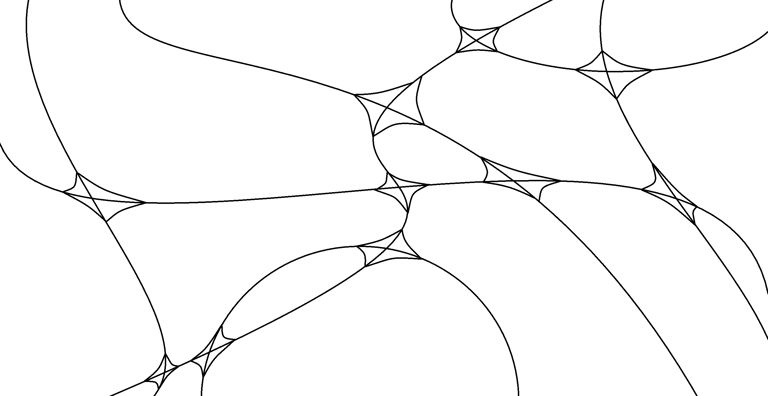
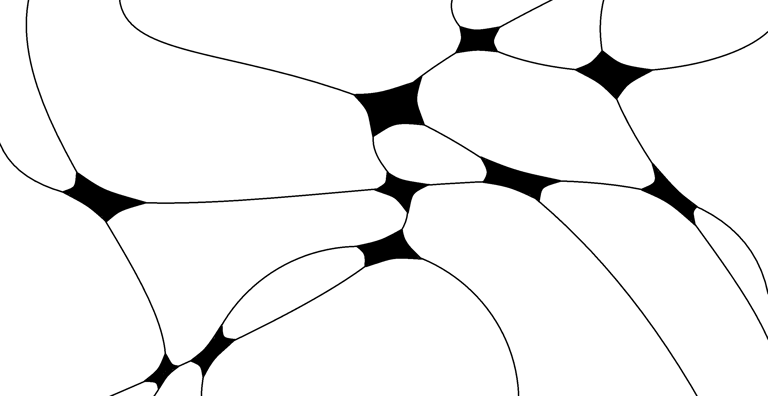


Step 3: Fill in the Rounded Intersections
Fill in those small curves with your pencil or ink. This ensures every connection looks like a smooth, organic joint, similar to a neuron or a root system.